You know the project made money. You just cannot prove it until it is over.
Oxana implements Microsoft Dynamics 365 Project Operations for Australian services firms who want that number while the project is still running, when it can still be acted on. Microsoft Cloud Solutions Partner serving Sydney, Melbourne and Brisbane.
A strange contradiction
Professional services firms run on a strange contradiction. You sell time and expertise with precision. You measure whether you made money on it with a spreadsheet, six weeks late.
The pattern is familiar. The quote was built in Excel by whoever won the work. Resourcing happened in a shared calendar and a series of favours. Time went into one system, expenses into another, and the invoice was assembled by hand at month end by someone who had to chase four people for their timesheets. By the time the project profitability number appears, the project is finished and the lesson is academic.
Oxana implements Microsoft Dynamics 365 Project Operations for Australian services firms who want that number while the project is still running, when it can still be acted on. We are a Microsoft Cloud Solutions Partner working across Sydney, Melbourne and Brisbane.
What Project Operations covers
It joins the whole chain, from opportunity to cash, on one platform.
Estimating and quoting
Build the estimate from roles, rates and effort. See the margin before you send it, not after you deliver it. Quotes become projects without rekeying.
Resourcing
Who is available, who has the skill, who is already committed. Book people against real capacity rather than optimism. See the utilisation gap two months out while you can still sell into it.
Project planning
Tasks, phases, dependencies, milestones. It works with Microsoft Project for the schedules that need that depth, and stays simple for the ones that do not.
Time and expense
Capture through the web, mobile or Teams. It has to be easy or it does not happen, and if it does not happen the whole model collapses. Approvals route to project managers.
Billing
Time and materials, fixed price, milestone, retainer, or a mix on the same engagement. Generate the invoice from the actuals. Revenue recognition handled properly.
Live profitability
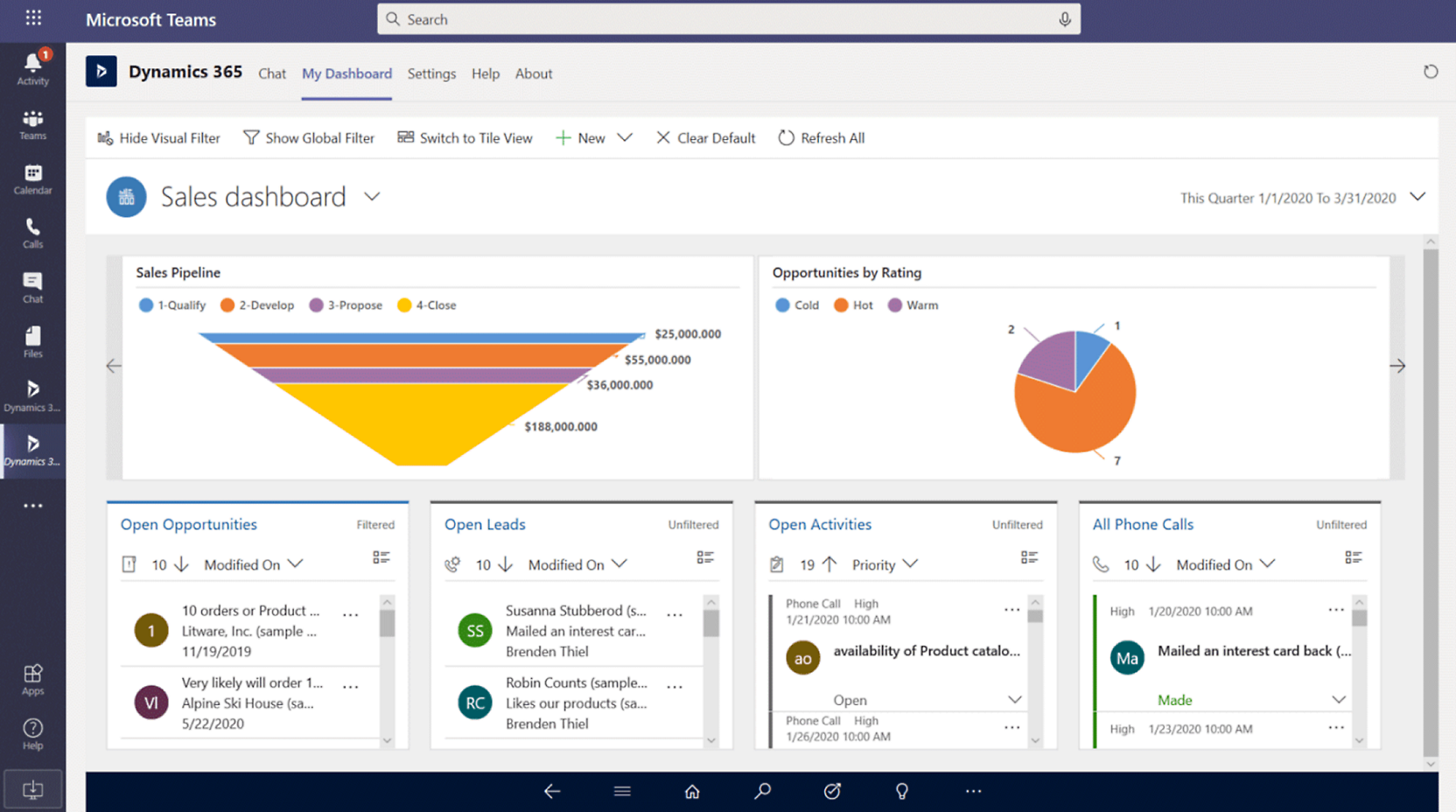
Actual cost against actual revenue, by project, by phase, by client, updating as work happens. That is the whole point.
Copilot
Status summaries, risk flags on projects trending over, drafting the client update.
The number that changes behaviour
Most firms we work with can tell you their revenue by client. Very few can tell you their margin by client, and the ones who work it out are usually unhappy about what they find.
Project Operations does not fix any of that. It just makes it visible early enough to do something about, which turns out to be most of the battle.
Where it connects
Because Dynamics 365 sits on the same Microsoft cloud as the rest of your stack, the joins are already there.
Business Central
Project invoices, costs and revenue recognition flow to your GL without a manual journal.
Dynamics 365 Sales
The opportunity carries into the project. The estimate the salesperson built is the estimate the delivery team inherits, which ends a very old argument.
Microsoft 365 and Teams
Time entry happens where your team already works, and project documents live in SharePoint against the project record.
Power BI
Utilisation, pipeline and margin in one dashboard your partners will actually look at.
How we deliver
Honest scoping, disproportionate effort on the timesheet step, and tuning once real data arrives.
Discovery
We map your delivery model honestly. Firms often have three or four ways of running a project and describe them as one. That has to surface early or the build will not fit.
Design
Rate cards, roles, project templates, approval flows, billing rules. We build for the way you sell, including the messy hybrid contracts.
Build
Sandbox configuration, integration to Business Central where relevant, dashboards for the metrics your leadership actually cares about.
Migrate
Open projects and their actuals come across. Closed history we bring only where it is worth having.
Adoption
This one lives or dies on timesheets. If time entry is painful, the data is wrong and every report built on it is fiction. We spend disproportionate effort making that step take under two minutes a day.
Ongoing
Oxana stays. Rate cards change annually. Reporting needs change quarterly. You will want things we did not anticipate.
Who this suits
Australian professional services firms roughly ten to two hundred people.
The common trigger is scale. Under twenty people, a spreadsheet and a good office manager genuinely works. Past that, the spreadsheet becomes a liability nobody owns.
If you have internal IT, Oxana works alongside them. They keep the relationships and the context. We bring the Project Operations depth that does not justify a full time hire. That is the co managed model we built the business on.
Common questions
About professional services automation, project management software and resource management for Australian firms.
How long does implementation take?
A firm under fifty people with a reasonably standard delivery model runs ten to fourteen weeks. Complex billing arrangements or a Business Central integration extend it. Fixed price after discovery.
What does Dynamics 365 Project Operations cost in Australia?
There is a full licence and a cheaper team member licence for people who only enter time and expenses. That distinction matters a lot for total cost and we will model it for you. Implementation is separate and fixed price after discovery.
Can we migrate from a spreadsheet, WorkflowMax or Harvest?
Yes. All common. The migration is straightforward. Agreeing your rate card structure usually is not, and that is the work.
Do we need Business Central?
No. Project Operations runs standalone with a connection to your existing finance system. The Business Central integration is cleaner but it is not a prerequisite.
Is this just Microsoft Project with extra steps?
No. Microsoft Project schedules work. Project Operations runs the commercial side, the quoting, resourcing, billing and margin. They work together and solve different problems.
Talk to us
If you find out whether a project made money after it finishes, book a call. We will look at how your work actually flows from sale to invoice and tell you where the money is leaking.
Oxana is a Microsoft Cloud Solutions Partner serving Sydney, Melbourne and Brisbane. The IT team behind your IT team.